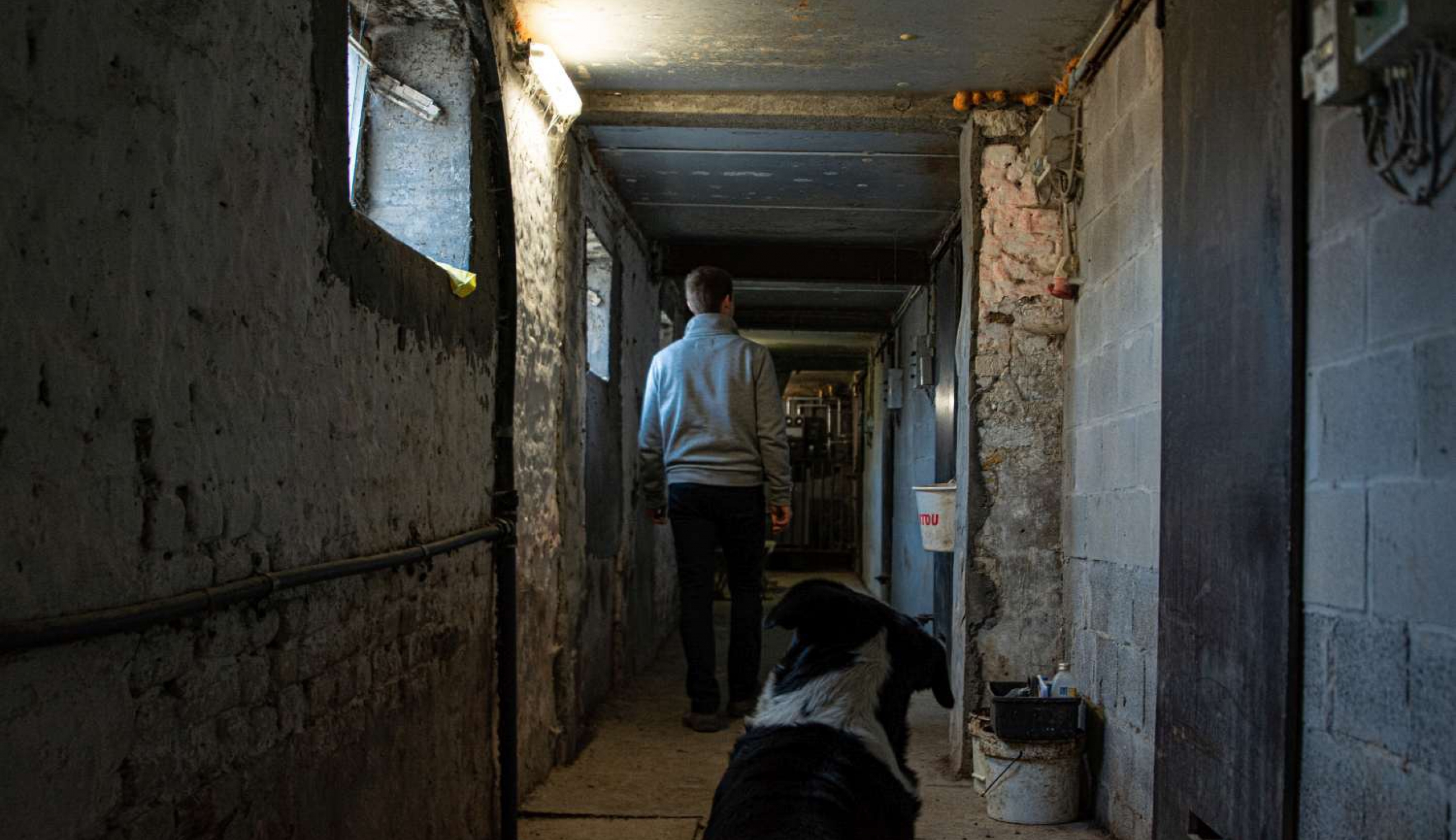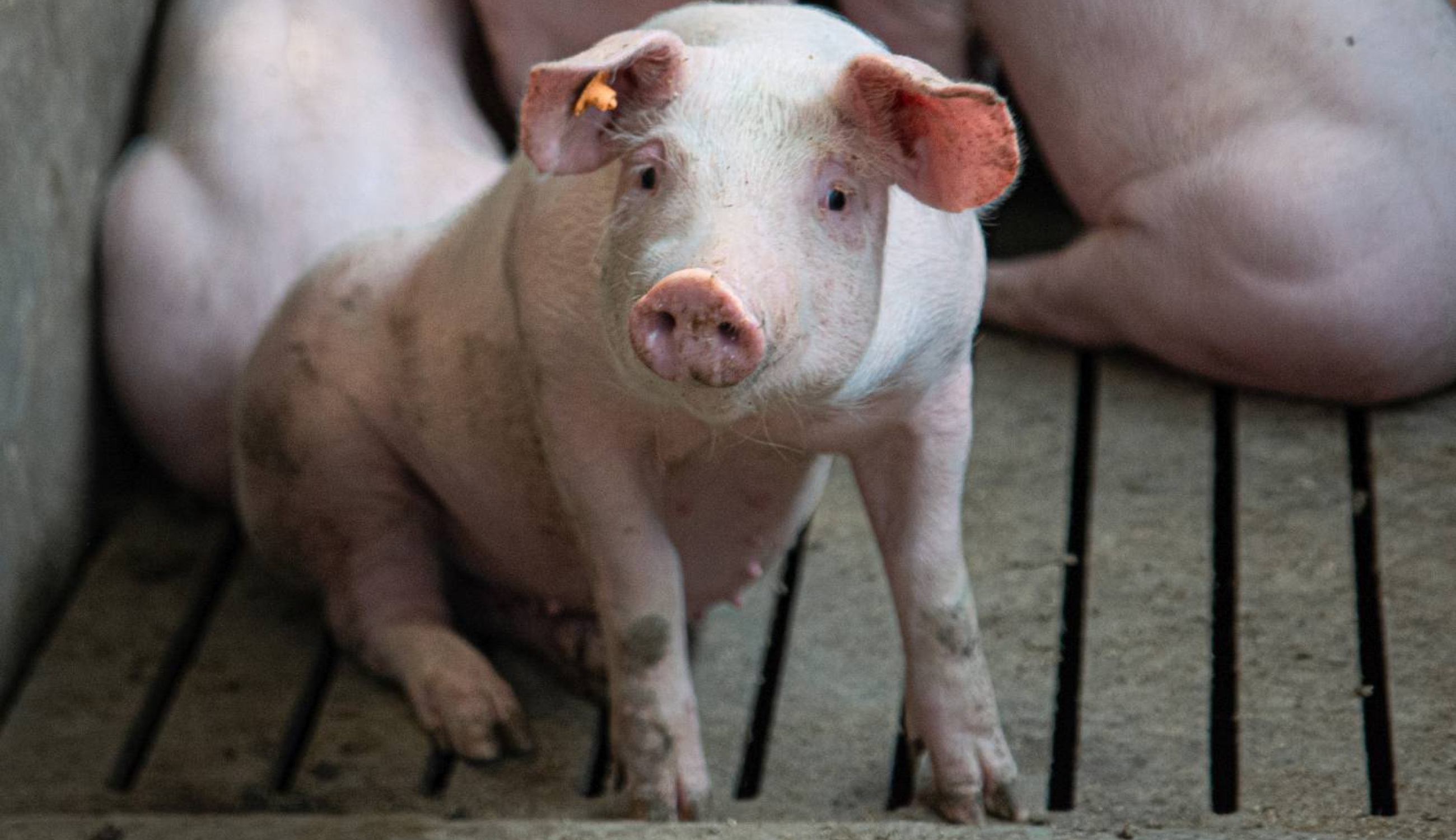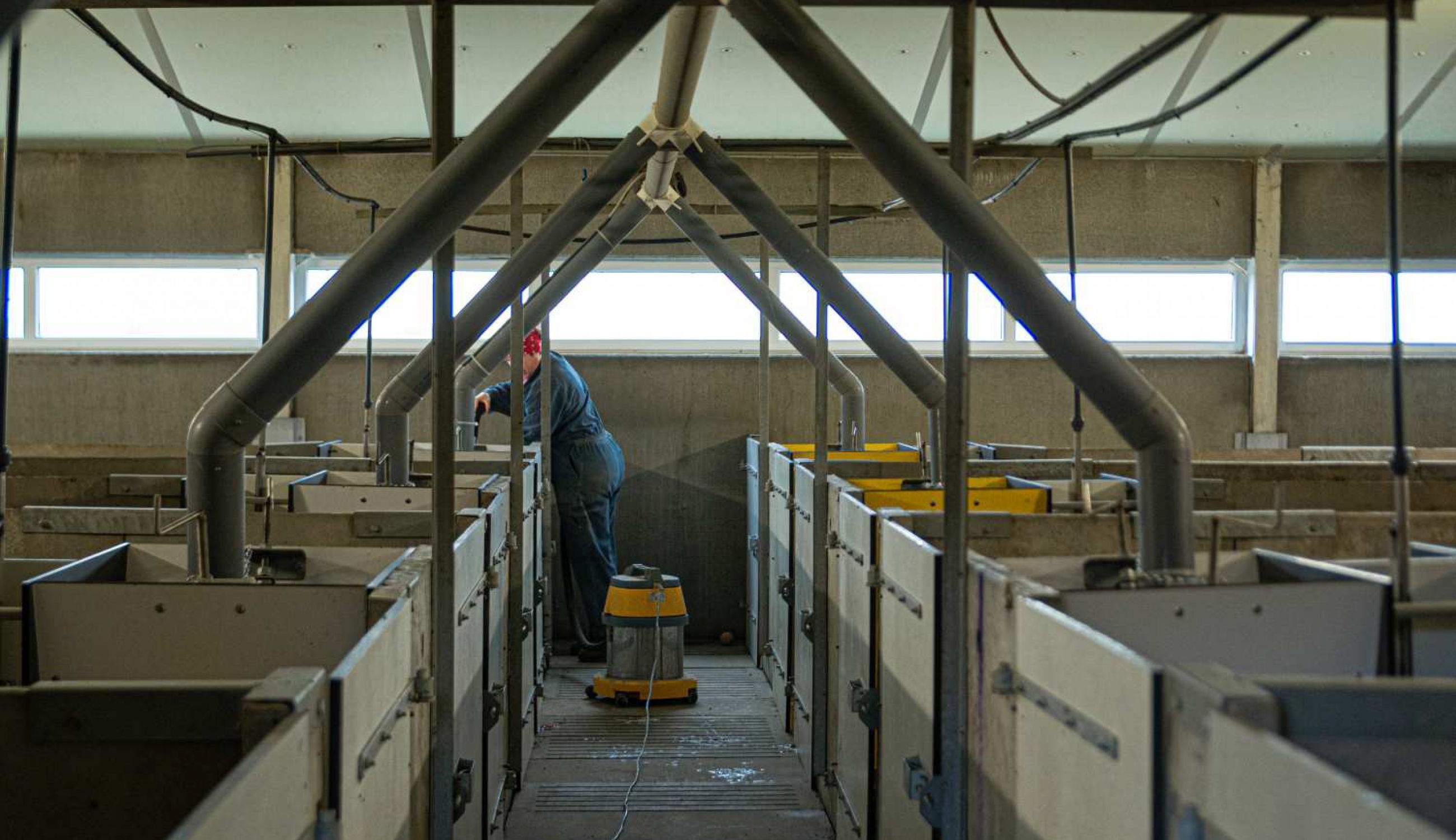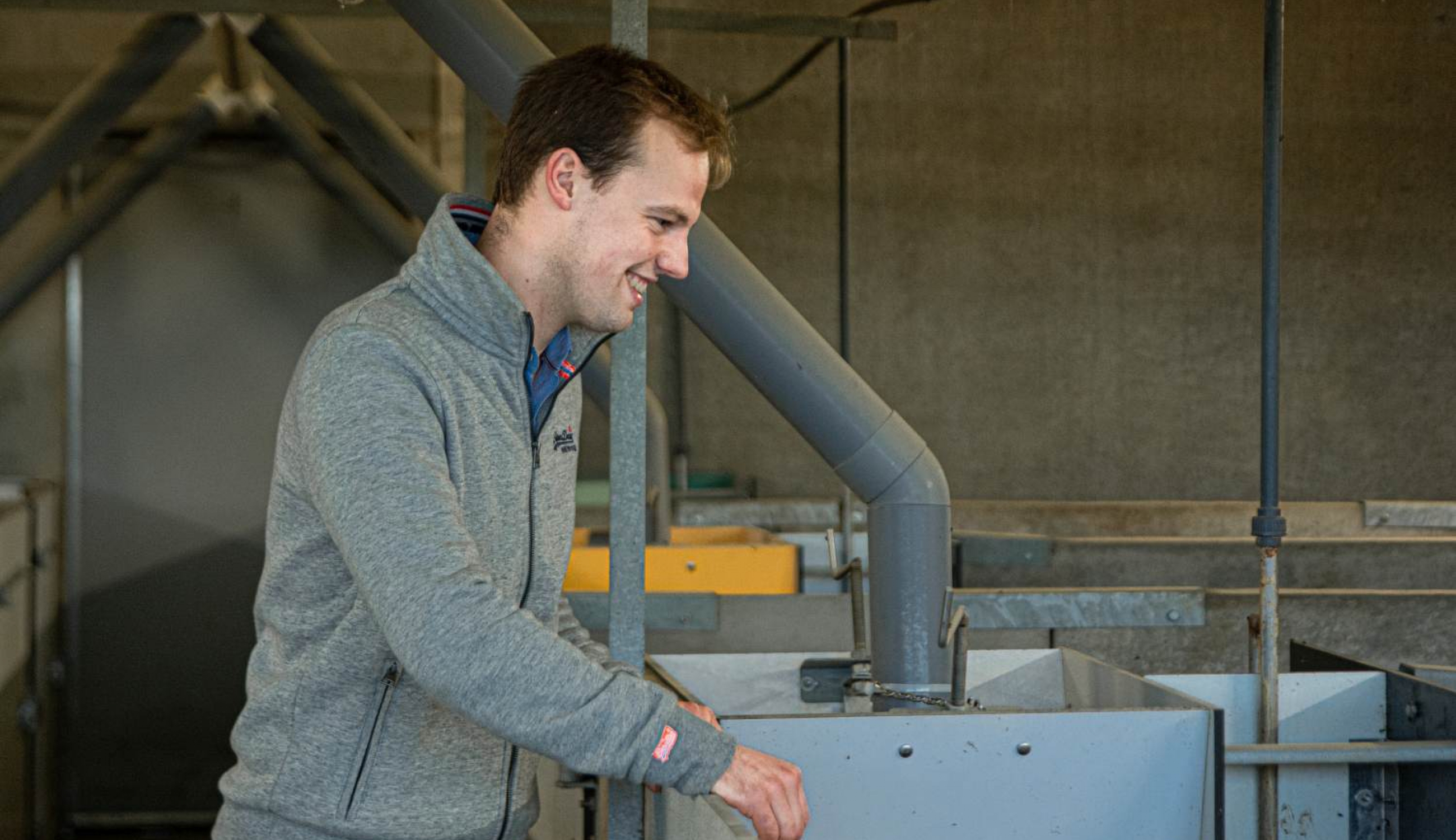
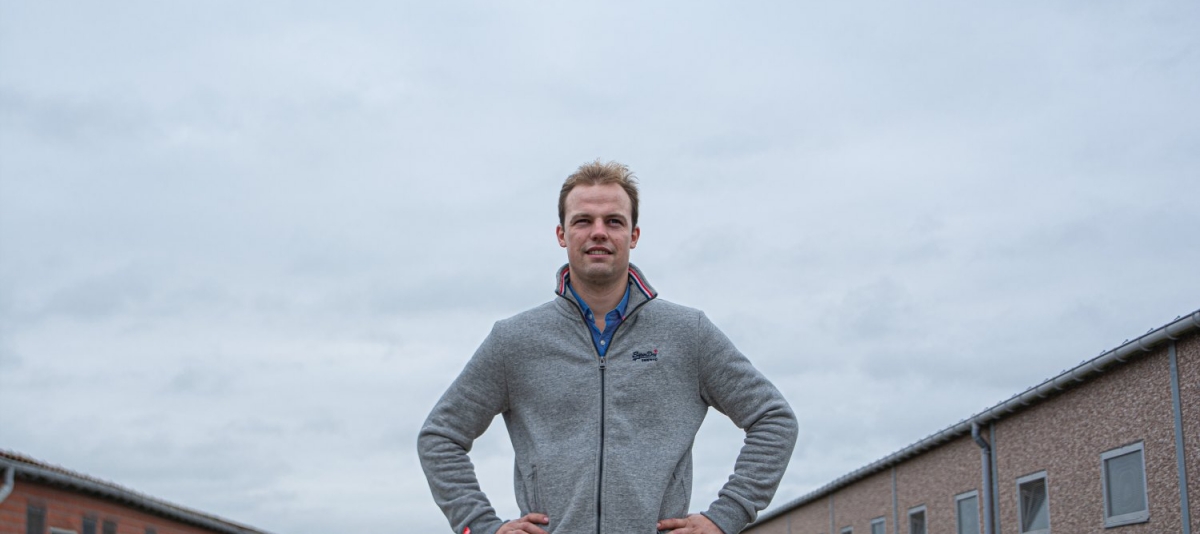
Deep in the polders, we talked to Sandrijn Vanhee, 29, farmer, pig farmer, supplier to Belgian Pork Group, but above all a pig lover.
“With their underfloor heating, my animals honestly have more comfort than I do”…
It’s in the blood. As a child, Sandrijn was already getting up at the crack of dawn to help load the pigs onto the truck before school. Keeping an eye on the animals on Sundays so his parents could take a few hours off? No problem for Sandrijn. In other words, it was written in the stars that he would one day follow in his parents’ footsteps.
Yet his parents didn’t exactly encourage him.
“They’d rather I went on to study. So I first went to vocational school and then did two years of agriculture. But at 18, the call became too strong. I joined my parents’ business…”
Not an obvious choice for a young man with the world at his feet.
“I didn’t have to think about it, though. I breathe pigs. It’s different for my brother. He chose not to join my parents’ farm. He also likes being outdoors, but farming appealed to him less. Now he works in landscaping, which is also a logical and great choice.”
Finding your way as a young guy in a sector that’s more complicated than it looks wasn’t easy.
“When I took over my parents’ business in 2015 and started out as a young entrepreneur at 25, the banks did look at me with suspicion. It was the banking crisis, and the future of agriculture wasn’t very clear at that point either. So the banks put the brakes on one of my investments. Understandable, of course, but I’m glad that over the years I’ve been able to prove that our farm is profitable and can stay that way.”
Keeping a farm running takes an enormous amount of dedication.
“Weekdays and weekends blur together. We also combine pig farming with arable farming, which makes certain times of the year extremely busy. At harvest time I sometimes don’t even see my bed: harvesting grain until late at night and then loading the pigs early in the morning, those are really tough days. A lot of people my age don’t fancy that. They’d rather travel or spend their time on their smartphones. But I’m not complaining; I’m just a positive person.”
Fortunately, he can count on the support of his partner Ann-Sophie, who, not by coincidence, is also the daughter of a pig farmer. “That’s worth its weight in gold. We speak the same language, we’re both aware of the sacrifices this job demands, but we also share our love for the animals and the trade.”
Over the years, Sandrijn has built up a great deal of knowledge about pigs. Knowledge he prefers to gain in practice. “Oh, I’m not one for training courses. I’d rather read up in a specialist magazine. Or, even better: just let me walk through my barns. It’s strange to say, but I have an eye for pigs. I can often tell from their ears, the way they’re lying or the way they look whether something’s wrong. It’s a feeling that rarely lets me down.”
“That’s why I’ve made a conscious choice never to give my animals antibiotics preventively or collectively. I keep antibiotics to an absolute minimum, because they don’t just kill the bad bacteria, they also harm the gut flora. And when you know that a pig is actually quite a delicate animal, you’d better be extra careful. So I’m proud that a great many pigs leave the farm here at seven months old without a single dose of antibiotics.”
“Oh, my animals actually have it pretty good here. So it’s a shame when footage of transports gone wrong, with lame animals, turns up in the media again. I’m not going to excuse those situations, but in practice it isn’t always easy, you know. These are animals of about 115 kilos on just four legs. One wrong step can be enough…”
So Sandrijn is pleased with the latest developments in the pig farming sector.
“We’re seeing more and more emphasis on the robustness of the animals, and less on production figures. Personally, I’d rather have fourteen strong piglets than twenty, six of which are weaker. The more emphasis is placed on production, the greater the risk of mortality among young animals, and nobody wants that.”
According to Sandrijn, it can only benefit the market.
“We’re living in uncertain times. All exports to China have come to a standstill because of African swine fever. Germany is also struggling with it. Here, the economic climate is unstable because of the coronavirus pandemic. That leads to oversupply on the market, and therefore lower prices. As pig farmers, we’re always at the end of the chain. I’m convinced consumers would be willing to pay more for their meat, but that’s just how a market of supply and demand works…”
Three statements for Sandrijn:
1. As a new pig farmer, you have to be half an idealist
“As a pig farmer, you have to spend 200% of your time on your trade. You really do have to be born for it. I see my parents’ generation gradually stepping back, and there are few successors. That’s not just about the dedication, but also about the heavy investments and the ever stricter requirements imposed on us. We’re hardly allowed to spray our land anymore, yet every gardening guide encourages people to fertilise their gardens properly. I don’t always understand it anymore, you know…”
2. Our trade federation should put more emphasis on where the meat comes from
“I agree that our Belgian companies deserve to be put in the spotlight. I’d certainly think it a shame if our supermarkets were flooded with foreign meat, knowing the efforts we make here every day to provide consumers with tasty, high-quality meat. Why not film on farms so people realise what dedication it takes to give them their daily portion of meat? Let’s focus on that, rather than on isolated incidents at slaughterhouses…”
3. The future belongs to farm butcheries, local markets and online collectives
“We have friends who successfully run a farm butchery. They combine it with a fruit and vegetable shop. I wish them all the best, but it doesn’t just take extra investment, because people will rightly demand that everything is perfectly hygienic. You also need the skills for it: enjoying being around people, having a chat with everyone. No, to each their own trade, if you ask me. And besides, all the time I spend in my shop is time I can’t spend with my pigs…”