CIRCULAR BUSINESS IS HOT.
AND THAT’S AN UNDERSTATEMENT.
Type the term into your search engine of choice and you’ll get more than 776,000 results. So there’s a lot being written, debated and philosophised about the subject. And rightly so, because caring for our planet is a universal concern, a matter of survival for current and future generations.
Debate is a good thing, then, as long as it doesn’t get bogged down in endless intellectual discussions that lead almost nowhere. Did you know, for example, that no fewer than 114 scientific definitions are in circulation to capture the concept of circular business? Great for scientists, but our style is a little different.
We’d rather roll up our sleeves, put our own house in order and look at what we can do ourselves.
So at the 2021 edition of the Belgian Pork Academy, we once again brought together scientists, producers, professionals, pig farmers and retailers to explore together how we can make our fine pig sector even more sustainable.
In the spotlight: Evi Galleyn
“CIRCULAR BUSINESS IS SO MUCH MORE THAN JUST REDUCING SOY…”
PROFILE
- Nutritionist
- Circular raw materials specialist at Leievoeders
- Leievoeders operates from Waregem and also has production sites in Poperinge, Roeselare and Veurne
- The company specialises in mixing compound feed for pigs, poultry and cattle
“IN FACT, MUCH OF THE PROGRESS HAS ALREADY BEEN MADE OVER THE PAST DECADES: WE NEED LESS AND LESS FEED TO PRODUCE MORE AND BETTER MEAT.”
Figures show that 62% of the greenhouse effect from pork is caused by the ecological impact of feed raw materials. It might seem as though the industry doesn’t care about the environment. Nothing could be further from the truth. “The sector has already made a great deal of effort. It’s just that certain factors get too little attention. Yes, we need to work on reducing soy residues in the production of animal feed, but there’s much more to it.” “In fact, much of the progress has already been made over the past decades: we need less and less feed to produce more and better meat. That’s also a way of using increasingly scarce resources responsibly. But we can also point out, for example, that our entire production is energy-neutral: we work with manure processing plants that power biogas plants, which generate electricity. We break substances down completely, so that even the wastewater can be discharged. For us, that’s sustainability too: thinking about the future. It doesn’t always get the airtime it deserves, but the pig sector really does focus on the long term. So it’s good that Belgian Pork Group draws attention to the issue in its Taste and Welfare Roadmap. The more of us pull together, the better.”
“FOR LEIEVOEDERS, IT WAS A RETURN TO BASICS, BECAUSE THE PIG HAS ALWAYS BEEN THE CIRCULAR ANIMAL PAR EXCELLENCE.”
It was from this angle that Leievoeders set up a pilot project on circular raw materials in animal feed over the past two years. “For Leievoeders, it was a return to basics, because the pig has always been the circular animal par excellence. Who doesn’t remember all the table scraps being fed to the pig?” “We wanted to find out whether it was possible to develop a feed made from 100% circular raw materials. But we soon realised there’s no conclusive definition of what that actually means. The government is still grappling with this debate too, and as long as there’s no clear-cut definition, it’s hard to objectify and compare things.” That didn’t stop Evi and her team from doing the exercise.
They took a very broad approach to developing the new type of feed. “For us, the origin of the raw materials isn’t the only priority. Quality remains just as important: we can develop fully circular feeds, but if they have no nutritional value, if they compromise food safety and if the pigs won’t eat them, are we really making progress?” For production, the company turned to products that have been rejected for human consumption and would otherwise hardly be used at all. And there are more of them than we think: underbaked bread, biscuits in the wrong packaging, but also flour that’s no longer suitable, beet pulp, corn gluten… “We believe there are still plenty of by-products that could get a second life this way. So it’s good to do the exercise. An important caveat is that it must never be actual waste. Pesticides or salmonella are completely out of the question. We’re terrified of possible contamination. That’s also why we’re still somewhat reluctant about feed based on animal meal. The Belgian and European authorities still have to take a clear position in that debate. If production means, for example, that separate transport has to be organised, then we wonder how ecological that really is.” In any case, tests on the new feed show there’s no loss of taste or quality. “In other words, if retailers ask for it, we’ll be ready. Although it remains to be seen whether end consumers are willing to pay a premium for the use of this circular feed. Unfortunately, we already see that pig farmers struggle to get a fair price from consumers. If they then also have to work with more expensive feed, their already very slim profit margin may shrink even further. And that can never be the goal…”
EVI ON THE BELGIAN PORK ACADEMY:
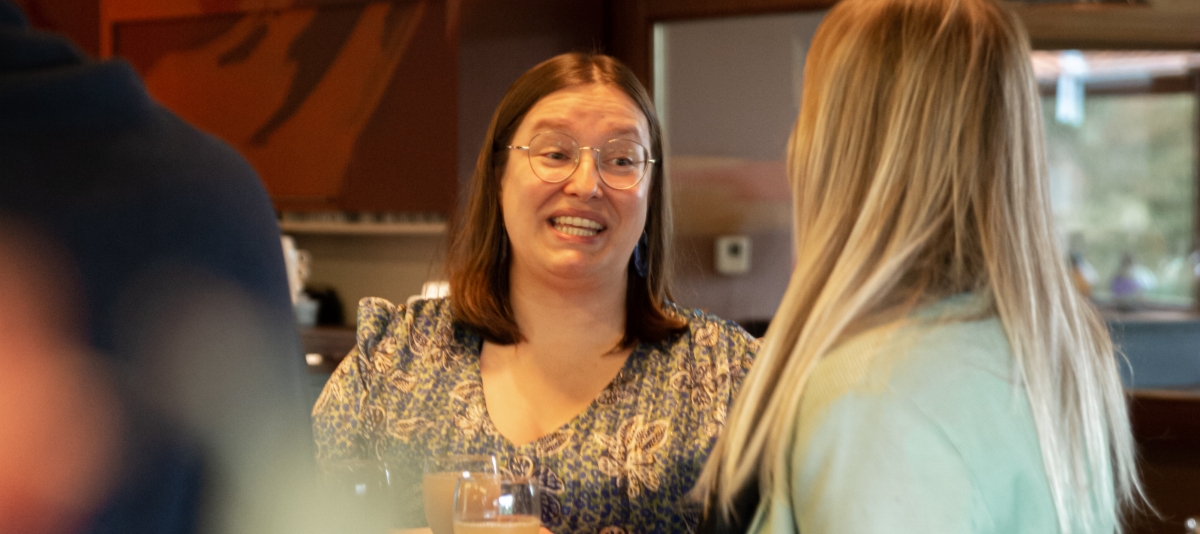
“There was a great vibe that afternoon. A surprising number of people turned up, and what struck me was how attentively everyone listened. There was genuine interest in the topic. A few sacred cows were also challenged. One comparison showed, for example, that you have to use your cotton shopping bag a great many times before it’s more eco-friendly than the small plastic bags that traditionally get criticised. So we shouldn’t always assume we’re doing the right thing…”